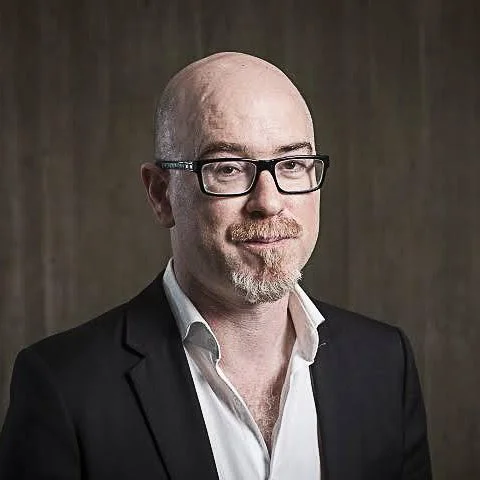
Vladimir Safatle
Contra a prosa:
salvar a musicalidade da palavra poética
Resumo: Gostaria de falar sobre a resistência da linguagem poética à prosa como um setor importante da resistência da autonomia estética à sua dissolução. Nesse sentido, gostaria de inicialmente fazer a defesa da autonomia estética como um exercício político de “resistência” da linguagem. Longe de uma compreensão da autonomia estética como operação auto-referencial dos próprios meios, como retorno da arte sobre si mesma, gostaria de defender que a autonomia aparece como forma de estremecimento da sensibilidade e de insubmissão da linguagem à ordem de significação do presente. Para tanto, gostaria de recuperar a matriz musical da autonomia musical e mostrar como o problema da autonomia estética se configura historicamente. Feito isto, gostaria de analisar o problema da musicalidade da linguagem poética tendo em vista uma discussão sobre o que pode ainda o debate sobre a função política da autonomia estética. Para tanto, gostaria de terminar discorrendo sobre dois poetas: João Cabral de Melo Neto e Paul Celan.
Biografia: Vladimir Safatle é formado em Filosofia pela Universidade de São Paulo (USP), mestre em Filosofia pela mesma instituição e doutor em Filosofia pela Universidade de Paris–VIII. Professor titular do Departamento de Filosofia da USP, onde leciona desde 2003, é também professor do Instituto de Psicologia da mesma universidade e foi professor convidado nas universidades de Ca’Foscari (Veneza), Paris I, Paris VII, Paris VIII, Paris X e Toulouse (França), Louvain (Bélgica), Essex (Inglaterra), Universidade de California, Berkeley (Estados Unidos), The New Institute (Alemanha), entre outros. Um dos coordenadores do Laboratório de Pesquisas em Teoria Social, Filosofia e Psicanálise (Latesfip/USP), é membro do conselho diretivo da International Society of Psychoanalysis and Philosophy. É colunista e comentarista de alguns dos principais meios de comunicação do país. Instagram: https://www.instagram.com/vladimirsafatle/ e Facebook: https://www.facebook.com/vladimir.safatle
2026
Keynote Speakers
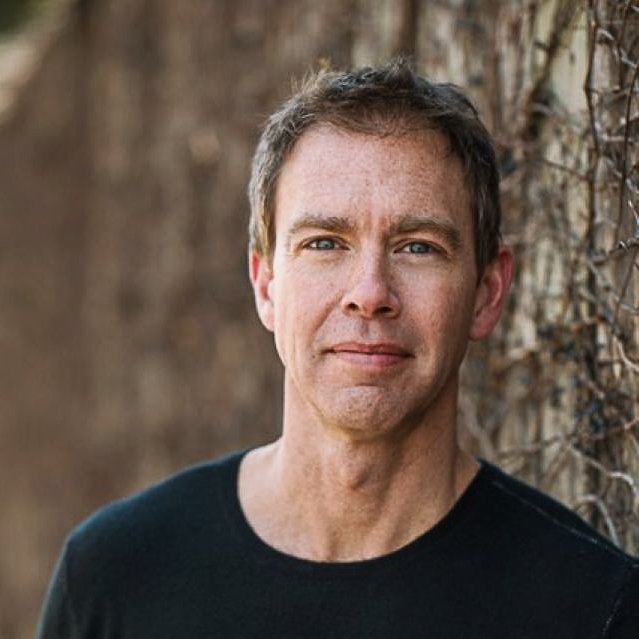
Nicholas Brown
Base and Superstructure
in Poetry
Abstract: For those who take both art and Marxism seriously, the base-superstructure relation presents an embarrassment. The seemingly harmless caution that the base “conditions” rather than “determines” the superstructure abandons the specificity of the materialist hypothesis. Hegelian idealism readily acknowledged that thought is conditioned: Absolute knowing is a horizon, not a practical description. In our time, there is nobody bold enough to insist that history, even in the specific form of economic structures and class struggle, in no way conditions culture. Meanwhile, the recourse to reciprocal action between culture and class struggle is incoherent, negating the principle it seeks to explain: if culture can intervene in the relations of production, then the relations of production are not the determining instance. As with most theoretical propositions, the hypothesis is interesting only in its absolute form. This doesn’t prevent the proliferation of “solutions,” mostly of Althusserian provenance. But all of them either are incoherent or tacitly abandon the thesis to be defended.
As difficult as the conceptual resolution of this matter appears, its practical resolution — which is also conceptual — is not only possible, but routine. As with the antinomy of theory and practice, whose unity is not a third concept but rather the Party (which is also a concept), the unity of determination and autonomy is not an idea, but an act that it is our task to understand. A poem, for example.
I propose to test this hypothesis on the artistic trajectory of the poet Ferreira Gullar.
Bio: Nicholas Brown teaches in the Departments of English, Black Studies, and Art History at the University of Illinois Chicago. His research touches on Marxism, Hegel studies, the history of aesthetics, Lusophone literature, and music studies. His most recent monograph, Autonomy: The Social Ontology of Art Under Capitalism (2019) explores the historical meaning of artworks’ immanent assertion of aesthetic autonomy after theory had ruled autonomy out of bounds. He is co-editing a book on Fredric Jameson (forthcoming 2026), and co-editing and co-translating into English a collection of essays by Antonio Candido and Roberto Schwarz (forthcoming 2026). Current monograph projects include an interpretative work on the symphonies of Gustav Mahler; a study of Brazilian neo-concretism; and Handle with Care, a critique and defense of contemporary literary theory. Former president of the Marxist Literary Group, Brown chairs the editorial board of the journal Mediations.